
Branded vs Generic Medicines: Why Can ₹50,000 Become ₹8,000?
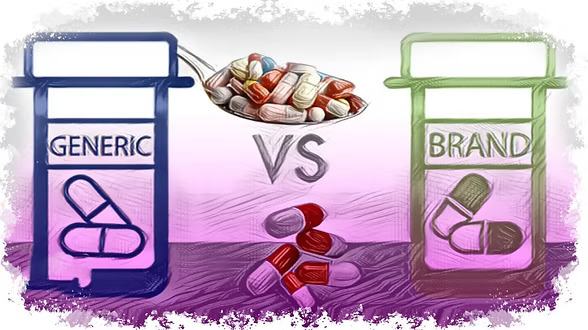
Branded vs Generic Medicines: Why Can ₹50,000 Become ₹8,000?
One medicine costs ₹50,000. Another costs ₹8,000.
That's a ₹42,000 difference.
But what if both are being used for the same treatment?
Does the ₹50,000 medicine work better?
Is the ₹8,000 medicine inferior?
Not necessarily.
The price of a medicine can reflect a much bigger story research, development, patents, manufacturing, branding and competition.
And when you look at specialty medicines, the difference can become even more interesting.
🔬 Where Does a Branded Medicine Begin?
Before a completely new medicine reaches patients, pharmaceutical companies may spend years developing it.
That can involve:
- Drug discovery and research
- Laboratory and preclinical studies
- Clinical trials
- Regulatory submissions
- Manufacturing development
- Quality and safety studies
- Long-term monitoring
There is also enormous financial risk.
A company can spend years and substantial resources developing a potential medicine that ultimately never reaches the market.
When a new medicine is successfully developed and approved, it may be launched under a brand name.
Patent protection and other applicable regulatory exclusivities can also provide a period in which competition is limited.
So the price of an innovative medicine isn't simply the cost of manufacturing one tablet, vial or injection.
💊 So Why Can a Generic Be So Much Cheaper?
Here's where the economics change.
When relevant patent or exclusivity protections no longer prevent competition, other manufacturers can develop versions of established medicines.
For conventional generic medicines, manufacturers generally do not have to repeat the entire original drug-discovery and clinical-development programme.
Instead, they develop the product according to the applicable regulatory requirements and demonstrate the required equivalence to the reference medicine.
That can significantly reduce development costs.
Then competition enters the market.
More manufacturers → more competition → potentially lower prices.
This is one major reason generic medicines can be sold for substantially less than their branded counterparts.
💰 Now Think About Specialty Medicines
This becomes much more noticeable with specialty medicines.
Imagine a cancer medicine where one product costs around ₹50,000, while another suitable alternative is available around ₹8,000.
For a single treatment, that's a huge difference.
For a patient requiring several treatment cycles, the financial impact can become enormous.
But seeing a lower price does not automatically mean you're looking at an inferior medicine.
The difference can be influenced by development history, patents, manufacturing costs, competition, brand positioning and supply chains.
And this isn't limited to cancer.
Similar pricing questions arise with specialty medicines used in rheumatology, nephrology, hematology, diabetes, gastroenterology, immunology and other areas.
🧬 But Biologics Change the Story
Here's an important distinction.
Many modern specialty medicines are biologics.
Biologics are complex medicines produced using biological systems and include products such as monoclonal antibodies, insulin, growth factors and other biological therapies.
For these medicines, the cheaper follow-on product is generally called a biosimilar, not a conventional generic.
Take trastuzumab, used for certain HER2-positive cancers.
A conventional generic approach cannot simply be applied to a complex biologic. Biosimilars require extensive analytical comparison and an appropriate regulatory evaluation to establish high similarity to the reference biologic.
And biologics aren't only used in oncology.
Biosimilars and biologic medicines are also relevant to conditions such as rheumatoid arthritis, diabetes, anemia, kidney-related conditions and other chronic or serious diseases.
This is why the words generic and biosimilar should not be used interchangeably.
🏷️ What About Branded Generics?
There's another reason this gets confusing, especially in India.
A company can manufacture an established generic molecule and sell it under its own brand name.
So a medicine can contain an established generic molecule while still having a recognizable commercial brand.
This means “branded” doesn't always mean “original innovator medicine.”
You can have multiple companies selling the same established molecule under different brand names, sometimes at very different prices.
⚠️ Does Expensive Mean Better?
No.
Price alone doesn't tell you whether one medicine is clinically better than another.
At the same time, patients shouldn't choose a medicine simply because it is the cheapest.
Before comparing products, look at:
- Active ingredient
- Strength and dosage form
- Manufacturer
- Regulatory status
- Quality and sourcing
- Storage requirements
- Generic, branded generic or biosimilar status
- Your doctor's prescription
For specialty medicines, particularly biologics and cancer treatments, never switch products simply because another option is cheaper without appropriate medical guidance.
🇮🇳 What About Medicine Prices in India?
India has a large pharmaceutical manufacturing base, which creates significant competition across many established medicines.
Medicine pricing is also subject to government regulation for products covered under the applicable pricing framework.
The National Pharmaceutical Pricing Authority (NPPA) currently regulates ceiling prices for numerous formulations, including medicines in areas such as cancer, diabetes and cardiovascular disease.
So the final price of a medicine can be influenced by both market competition and government pricing regulations.
The Bottom Line
When you see:
₹50,000 vs ₹8,000
it's easy to assume:
“The ₹50,000 medicine must be better.”
But price doesn't tell the whole story.
Behind that difference can be R&D, patents, clinical development, manufacturing, branding, distribution and competition.
For conventional medicines, this can lead to large differences between branded and generic products.
For biologics, the picture is more complex because competing products are generally biosimilars, which follow a different development and regulatory pathway.
Expensive doesn't automatically mean better.
Cheap doesn't automatically mean inferior.
The real question is:
What exactly are you comparing?
Macarius Health Perspective
At Macarius Health, we believe patients should be able to look beyond a medicine's brand name and price.
Understanding the molecule, manufacturer, quality, regulatory status, pricing and supply chain can give you a much clearer picture of the medicine in front of you.
Because sometimes, the biggest difference between two medicines isn't what's inside the tablet or vial
it's everything that happened before it reached the patient.
Important Note
This article is for general educational purposes and does not replace medical advice. Prescription medicines, specialty medicines, biologics and biosimilars should be used or changed only under appropriate guidance from a qualified healthcare professional.