
Why Does the Same Medicine Have Different Prices?
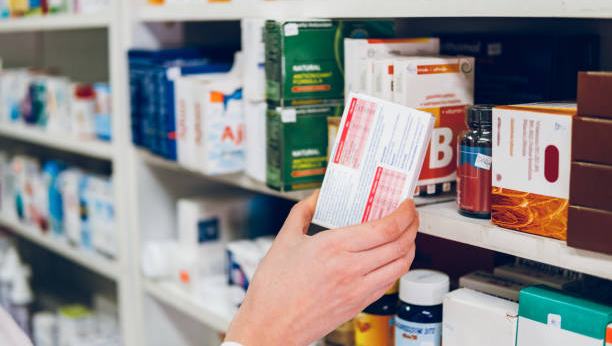
Why Does the Same Medicine Have Different Prices?
Have you ever found two medicines with the same active ingredient and strength, but completely different prices?
One brand may cost ₹50 while another costs ₹150 or more.
This can make you wonder:
- Is the expensive medicine better?
- Is the cheaper one genuine?
- Why is there such a big price difference?
The answer is simple: the price of a medicine depends on much more than its active ingredient.
Same Molecule, Different Brand
The active pharmaceutical ingredient (API) is the substance responsible for a medicine's therapeutic effect.
The same active ingredient can be sold by different pharmaceutical companies under different brand names.
These products may have the same:
- Active ingredient
- Strength
- Intended therapeutic use
But they can still have different prices.
A price difference does not automatically mean that one medicine is fake or that the more expensive one is better.
However, medicines should not be compared by molecule alone. Dosage form, formulation, manufacturer and pack size also matter.
Why Do Different Brands Have Different Prices?
There is no single reason.
The final price can be influenced by several costs throughout the pharmaceutical supply chain, including:
- Manufacturing
- Active ingredients and other formulation components
- Quality testing
- Packaging
- Storage
- Transportation
- Distribution
- Import-related costs
- Market conditions
- Brand and commercial strategy
So, the cost of making the medicine is only one part of the price a patient eventually sees.
Does a Higher Price Mean Better Medicine?
No, not necessarily.
Price alone does not determine how well a medicine works.
For generic and multisource medicines, quality is determined through regulatory requirements and appropriate testing. Where required, products may also need to demonstrate bioequivalence or therapeutic equivalence.
Therefore:
Higher price ≠ automatically better medicine
And:
Lower price ≠ automatically poor quality
Patients should also avoid changing a prescribed medicine simply because another brand is cheaper. Any substitution should be discussed with a doctor or pharmacist.
Why Are Some Medicines So Expensive?
This is especially noticeable with certain specialty medicines used in areas such as:
- Oncology
- Hematology
- Nephrology
- Rheumatology
- Rare diseases
Some may involve:
- Complex manufacturing
- Specialized quality testing
- Biologic or highly specialized production
- Temperature-controlled storage
- Specialized transportation
- Imported supply chains
- Smaller patient populations
- Significant research and development costs
Every medicine has its own cost structure, so there isn't one explanation for all expensive medicines.
Does the Government Control Medicine Prices in India?
For some medicines, yes.
India has a drug price-control framework under the Drugs (Prices Control) Order (DPCO), administered by the National Pharmaceutical Pricing Authority (NPPA).
Certain medicines covered under the applicable schedule can have a government-notified ceiling price.
However, not every medicine is subject to the same price-control mechanism.
This is one reason pharmaceutical pricing in India can sometimes appear complicated.
Why Can Prices Differ Between Pharmacies?
A medicine usually passes through several stages before reaching a patient:
Manufacturer / Importer → Distributor → Pharmacy or Hospital → Patient
Costs related to transportation, storage, inventory and handling can occur along the way.
Hospitals and pharmacies may also purchase different quantities and operate under different commercial arrangements.
As a result, the price offered to different customers may not always be identical.
Can a Medicine Be Sold Below Its MRP?
Yes.
MRP means Maximum Retail Price.
A medicine can legally be sold below its printed MRP under the applicable rules.
However, don't judge a medicine only by its price.
When buying a medicine, also check:
- Manufacturer
- Batch number
- Manufacturing and expiry dates
- Packaging condition
- Storage requirements
- Source of purchase
A very low price by itself does not prove that a medicine is fake.
What Should You Check Before Comparing Two Medicines?
Before deciding that one medicine is cheaper than another, check whether you are actually comparing equivalent products.
Check these 6 things:
- Active ingredient — Is the molecule the same?
- Strength — For example, 50 mg and 100 mg are different strengths.
- Dosage form — Tablet, capsule, injection and other formulations may differ.
- Pack size — Compare the same number of tablets, capsules or units.
- Manufacturer — Check who made the product.
- Expiry and batch details — These help identify and track the medicine.
The Bottom Line
The same medicine can have different prices because pharmaceutical pricing involves much more than the active ingredient.
Manufacturing, quality testing, packaging, distribution, storage, imports, market conditions, brand strategy and government regulations can all influence the price.
Remember:
Higher price does not automatically mean better medicine.
Lower price does not automatically mean poor-quality medicine.
Different prices do not automatically mean one product is fake.
What matters is understanding exactly what you are comparing and purchasing medicines through legitimate sources.
For prescription medicines, never change or substitute your treatment solely because another product is cheaper. Speak with your doctor or pharmacist first.
The Macarius Health Perspective
At Macarius Health, we believe people should understand what happens behind the medicine.
From manufacturing and quality control to storage, distribution and patient access, there is an entire pharmaceutical system behind every medicine.
Our Knowledge Hub aims to explain these practical pharmaceutical and healthcare questions in simple language.
Because understanding your medicine starts with understanding what is behind it.
Important Note
This article is for general educational purposes only. It does not replace medical advice, a prescription or professional guidance from a doctor or pharmacist.